
Why 4 Field Tests Beat Any Supplier's Spec Sheet When Buying Trimmer Line
Why 4 Field Tests Beat Any Supplier's Spec Sheet When Buying Trimmer Line
A spec sheet tells you what the supplier measured under their conditions. Four field tests tell you what the line will do under your customer's. After 19 years across 20+ markets, here's the 15-minute sample verification protocol we run before placing any order.
OPE Technical Sourcing Team | 19 Years Industry Experience | 20+ Countries Served
We ran four tests on the sample in under 12 minutes. Two of them failed.
The spec sheet was accurate — the material was PA66, the diameter was in tolerance. But the line snapped at the bend radius of a standard trimmer head, and soaking it in cold water didn't recover the flexibility the way good PA66 should.
We told him to pass.
That's when it became clear: most B2B buyers trust the spec sheet because they don't know what to test instead. So here are the four field tests we run on every trimmer line sample before we'll put a name behind it.
A spec sheet tells you what the supplier measured under their conditions. These four tests tell you what the line will do under your customer's conditions.
The Four Field Tests
This is the most important test — and the one most buyers skip.
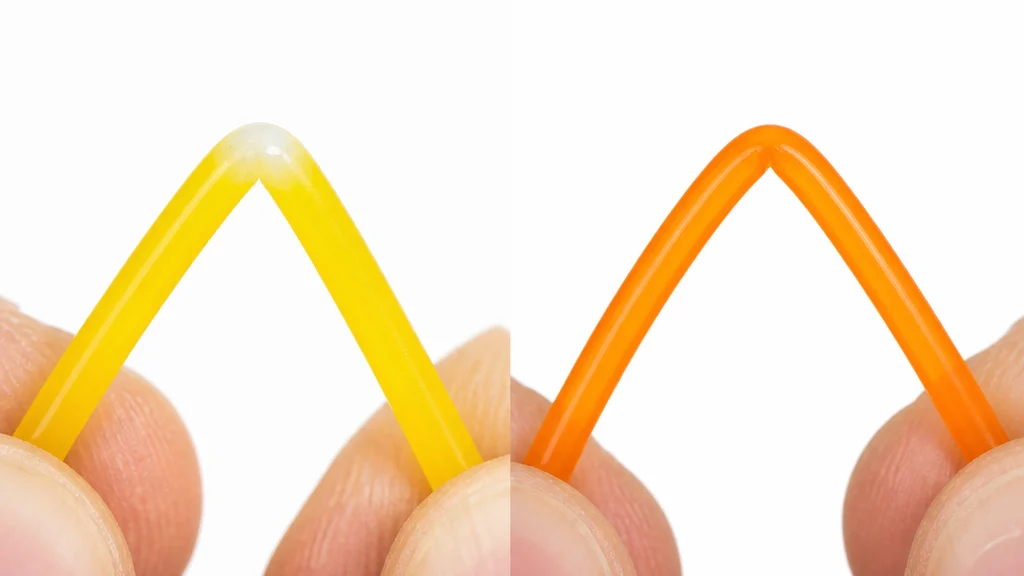
Take a 30cm length of line. Wrap it around a mandrel the same diameter as a standard trimmer head eyelet — about 8mm. Bend it back and forth 10 times at the same point.
The bend point whitens (stress crystallization) but the line holds. You can feel it stiffen, but it doesn't snap.
The line snaps between bend 3 and bend 7. The break is clean, almost glassy — that's brittle fracture, not ductile failure.
Watch ForWe've seen samples that pass every other test and fail this one — usually because the supplier used a higher percentage of regrind material, or ran the extrusion temperature too hot and degraded the polymer chain. The spec sheet still says "PA66." The line still fails.
This one surprises buyers who read our first article on material grade. They assume PA66 automatically means quality. It doesn't — PA66 that's been stored dry, extruded too hot, or mixed with regrind behaves like a lower grade.
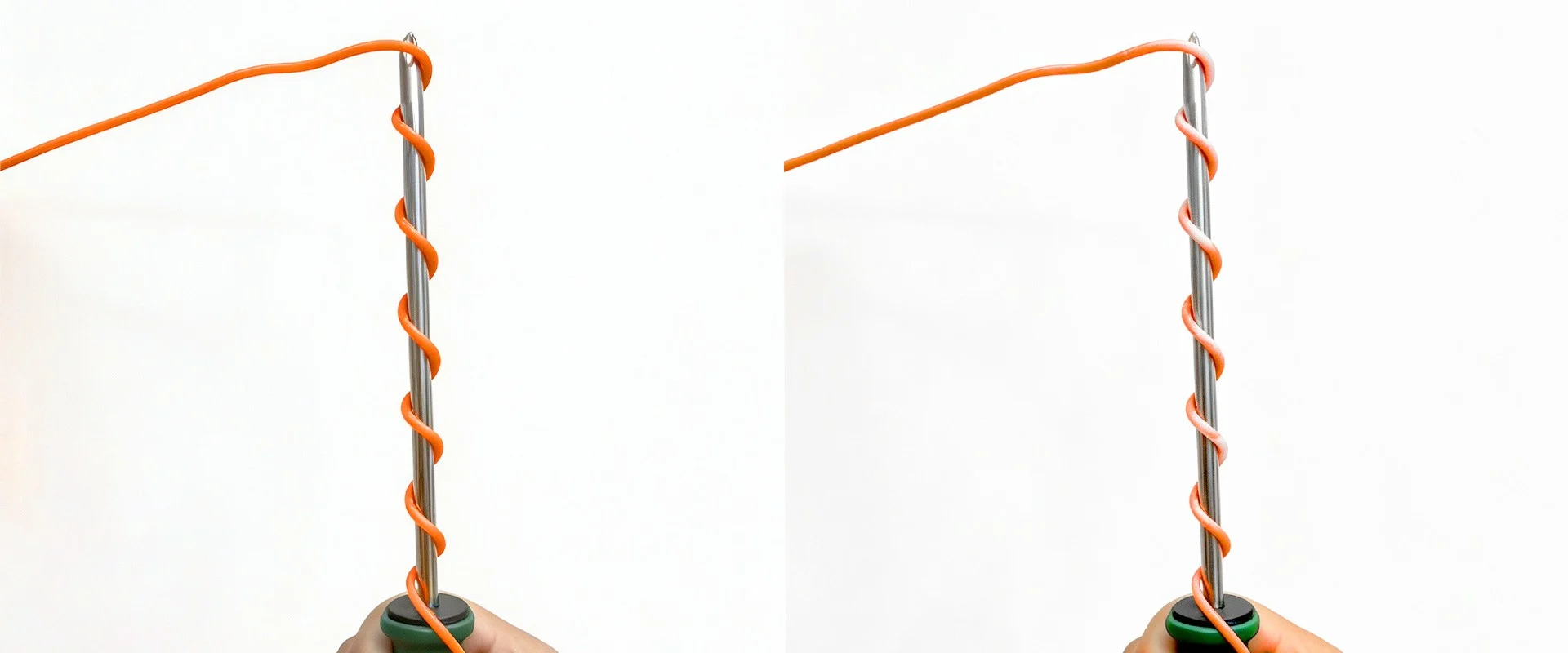
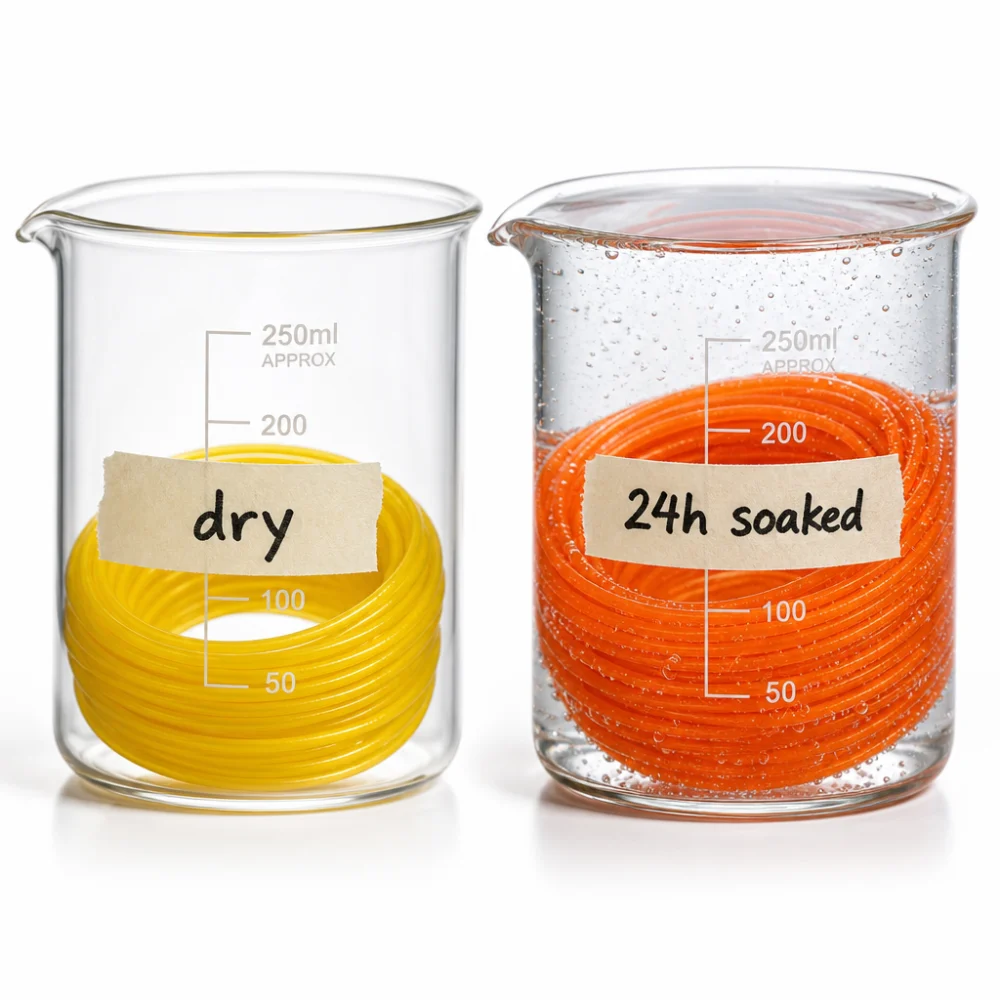
Cut two identical 20cm lengths. Soak one in cold water for 24 hours. Leave the other dry. After 24 hours, run Test 1 (the bend test) on both.
The soaked sample performs meaningfully better — more flexible, fewer snaps. The dry sample still passes, but less comfortably.
The soaked sample performs no better than the dry one. If hydration can't rescue the flexibility, the polymer chain is already damaged — regrind content too high, or extrusion temperature too hot.
This sounds obvious. It isn't done enough.
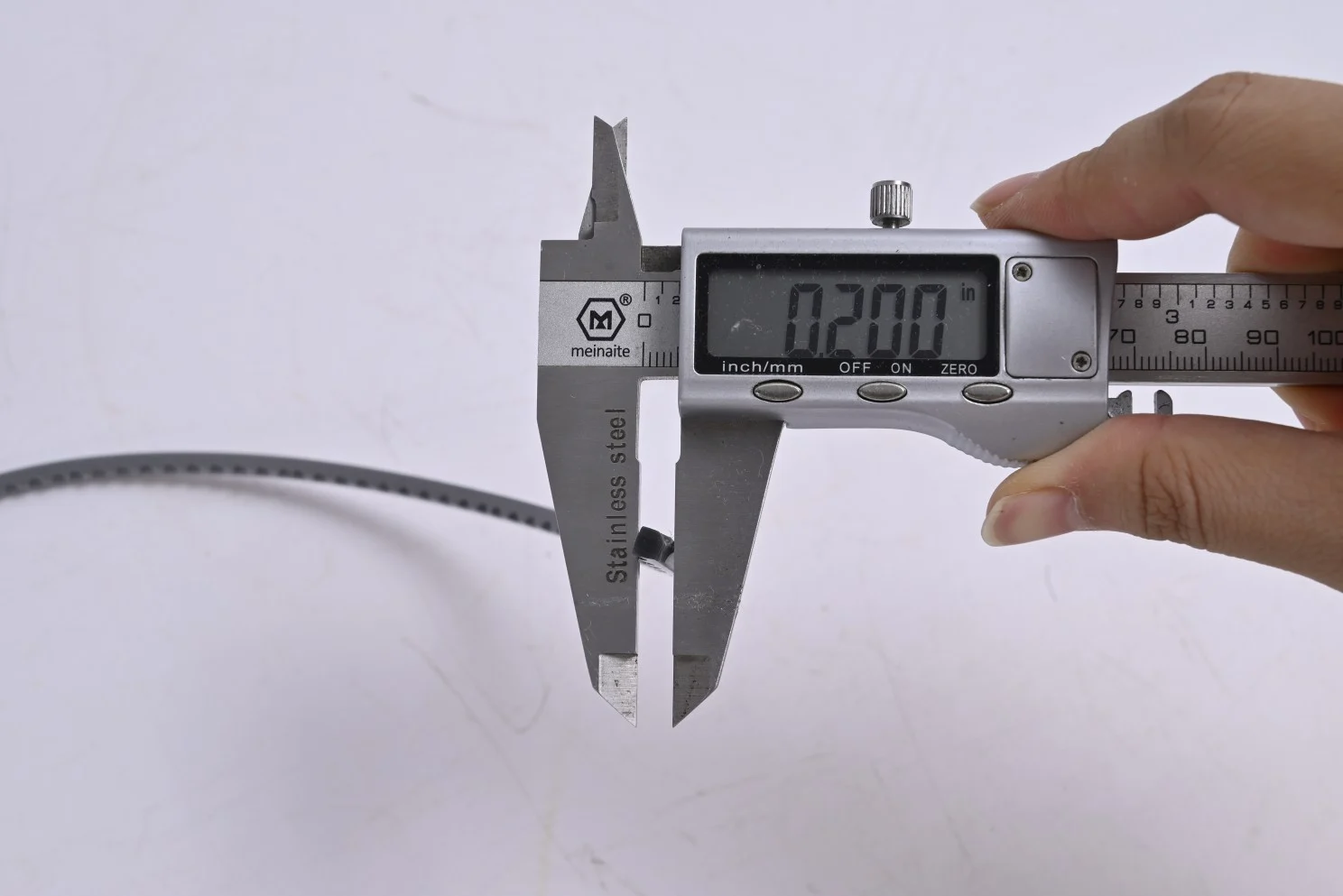
Measure the line diameter with a caliper at three points along the length. Then, if the line is a shaped profile (sawtooth, square, star), measure the effective outer diameter — the widest point including teeth or edges.
The measured diameter is within ±0.05mm of the claimed diameter. For shaped lines, the effective OD is documented and matches what the trimmer head expects.
The measured core diameter is correct, but the effective OD (including teeth) exceeds the trimmer head's eyelet tolerance. The line won't feed, won't fit, or jams in the head.
Buyer TakeawayWe've seen buyers return entire shipments over this — the spec said .155", the caliper confirmed .155" at the core, but the head still wouldn't accept it because no one measured the teeth. If you sell sawtooth or serrated profiles, measure the effective OD, not just the core diameter. If you're buying, ask the supplier for both numbers. If they only give you one, that's a signal.
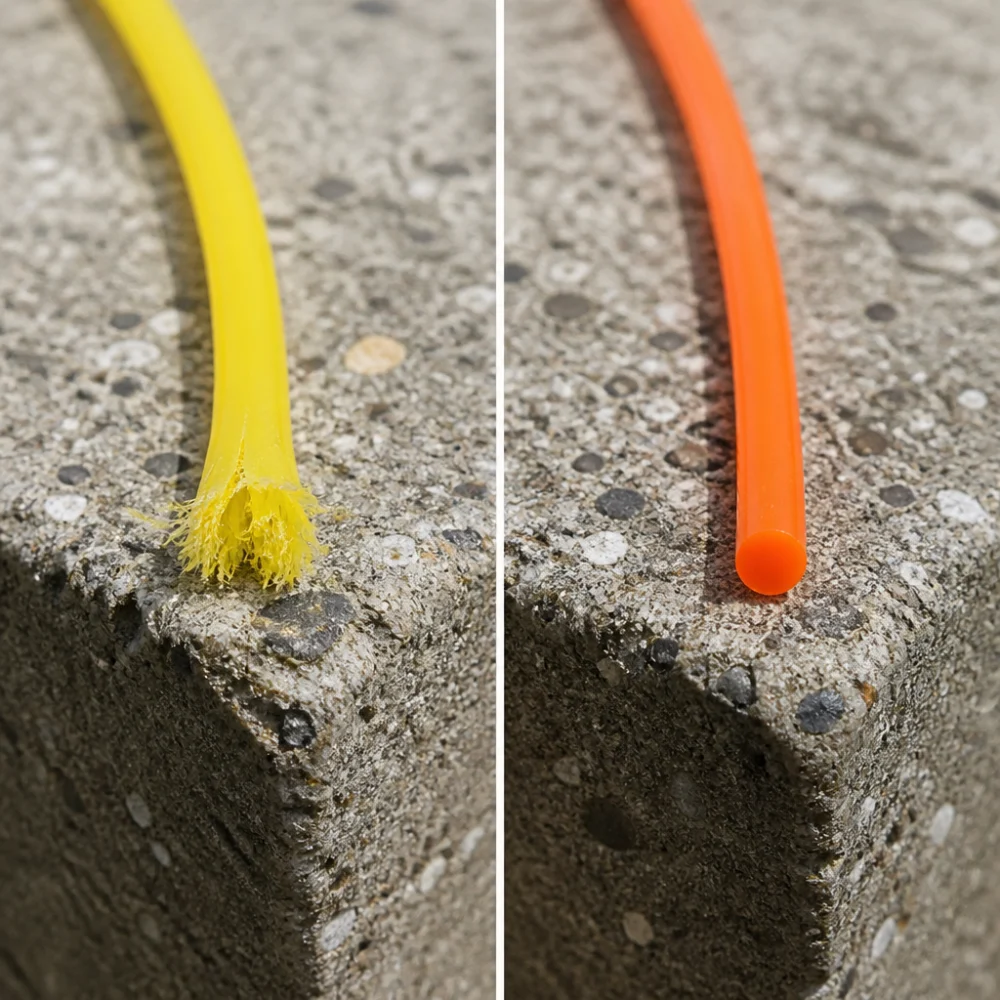
This is the test that predicts whether your end user writes "cuts great but snaps on the first rock" or "best line I've ever used."
Mount a short length of line in a trimmer head (or clamp it to mimic the spin). Run it against a hard surface — a concrete edge, a stone, a fence post — at the angle a user would actually hit one.
The tip deforms, mushrooms, or frays — but doesn't snap. The line loses length gradually through wear, not through catastrophic failure.
The line snaps clean on the first or second hard contact. The break is brittle, not ductile.
Why These Four Tests Matter More Than the Spec Sheet
The pattern we've seen across 19 years is consistent: the test a supplier fails predicts the complaint you'll field.
| Test Failure | What Breaks | Resulting Complaint Pattern |
|---|---|---|
| All Four Pass | Nothing | Suppliers who pass all four tests rarely get returns. |
| Test 1 or 2 Fail | Toughness / hydration | Breakage complaints within the first month. |
| Test 3 Fails | Effective OD mismatch | "Won't fit" returns — the hardest to diagnose because the spec sheet looks correct. |
| Test 4 Fails | Impact resistance | "Snaps on rocks" reviews that tank the product's rating before the season is half over. |
Run the four tests on a sample before you place the order. It costs you 15 minutes and a pair of gloves. It saves you a container of returns and a season of bad reviews.
The Complete Selection Framework
If you've followed this series this far, you now have a complete selection framework — the same decision tree we use with every new distributor:
The Bottom Line
Spec sheets aren't lies — they're incomplete. They tell you what the supplier measured under their conditions. These four tests tell you what the line will do under your customer's. Run them on every sample. Fifteen minutes of verification protects a season of reputation.
In the final article in this series, we'll cover OEM customization — what to specify, what to leave to the supplier, and how to build a private-label program without losing quality control.
Want the 4 Field Tests as a Printable Reference?
Contact our team for the one-page PDF checklist and our full product portfolio, verified batch-by-batch against these exact tests.
Request Test Checklist & Catalog© 2026 Antanker OPE Parts. All rights reserved. | This article is part of the Trimmer Line Field Guide series for B2B distributors and sourcing professionals.